Horse Health Education Hub — General
Contributed and supported by Mickie Magan
WHAT IS EQUINE HERBAL MEDICINE?
Equine herbal medicine is plant based medicine for horses.
In the wild, horses and other animals self-medicate when they feel unwell or off colour.
Horses travel many kilometres during the day and eat multitudes of plants, leaves, roots, bark and other vegetation. Many of these plants have medicinal and therapeutic benefits as well as vitamin, mineral and nutrient content. Animals have an innate knowledge of how to help themselves.
The domestication of horses has seen them put into unnatural living conditions and therefore it’s up to us to provide these nutrients and medicines in the most natural, non-invasive and easily absorbed way we can.
It’s important to note that veterinary medicine and herbal medicine CAN complement each other, and certainly do not have to be at odds.
One of the most obvious things we need to consider is the horses’ physiology.
How the body systems function; such as the gastrointestinal system, the cardio vascular system, the immune system, the endocrine system, all have the same working parts, and the same physical features and apparatus as they have always had for thousands of years. Like humans, horses have not evolved physiologically for a very long time.
What has changed, is what we are placing into these systems now and expecting them to absorb, digest and process.
Medicines that contain synthetic ingredients may not be as recognisable at a cellular level compared to natural plant based chemical compounds.
The other way plant medicine assists, is in its synergistic approach. Many chemical compounds in plants work together to produce more than one result.
The isolation of “active ingredients”, does not allow for the synergy of the plant to work as a whole.
It is well accepted and documented now that there are an array of illnesses and physical conditions that can be addressed, cured and reversed by nutrition and supplementation alone. Type 2 diabetes, some cardiovascular diseases, high blood pressure etc, can be managed, reversed and in some cases completely eliminated, by changing what we eat and more importantly the elimination of contributing factors that are at the root of the disease or illness.
This is just as true for horses and other animals.
Natural health encompasses a lot more than just physical wellbeing. It is important to remember that good health is not simply an absence of disease. A lack of symptoms of sickness or disease does not mean we are in sparkling good health.
PREVENTION IS ALWAYS BETTER THAN CURE
Herbal preparations, can help the body to recover from the medicine. Pharmaceuticals once they have done their job, can cause an imbalance in the body, sometimes in the gut, sometimes in the tissues, while healing one ailment it can also contribute to another secondary issue. Anyone who has ever had to be on a course of strong antibiotics and then had to receive treatment for the candida that can follow will understand. Prevention is always better (and often cheaper) than cure.
Keeping our horse in good health all year round greatly reduces the potential for illness to take hold. A robust immune system and superior gut health can combat many problems.
HOW DOES IT WORK?
Beginning with a thorough holistic health assessment, which considers all aspects of the horse’s life.
In person or zoom/ te3lephonecon sultations take around 45 minutes and includes a physical examination including vital signs and any physical attributes or restrictions the horse may have, as well as looking at the living environment, the feeding regime and amassing as much information about the horse and the owner/rider’s goals for the horse.
Some of the factors that influence the treatment, are age, breed, sex, conformation, personality, career or workload, living conditions, worming and dental status.
Specific issues to the horse whether they be illness, injury, hormones or behavioural problems are discussed in detail.
Once I have a thorough understanding of the horse and its lifestyle, then a tailor-made individual treatment plan is put together.
This may include changes to a more natural diet, individually made and boxed supplements, a herbal prescription or handmade oil or cream and other treatments to ensure the horse is treated as a whole and not just a set of symptoms.
Treating in this way, addresses the root cause rather than just masking the symptoms that make the horse uncomfortable.
Other healing modalities are used to assist in the treatment of horses, such as Bach Flower Remedies and therapeutic human grade essential oils.
WHAT CAN BE TREATED BY EQUINE HERBAL MEDICINE?
Not only can herbal medicine treat a great number of health problems, it can also help to prevent many of them from occurring in the first place.
- Digestive issues
- Gut ulceration
- Inability to put weight on or weight gain
- Scouring or constipation
- Immune system resetting and boosting
- Adrenal issues,
- Most types of respiratory issues
- Problems with skin, hair, hooves
- Muscular and bone issues such as tying up
- Bone spurs, splints or chips
- Arthritis
- Nervous or behavioural issues
- Urinary or kidney problems
- Hormonal imbalances or fertility problems
- Metabolic disorders
- EMS
- Cushing’s disease
- Laminitic horses
HERBAL PRESCRIPTIONS
I have noticed in consulting to clients that there are some misconceptions about herbs. A lot of people think that its simply adding dried herbs from the shop into the feed.
Dried herbs are not as efficient at treating illness, simply because they don’t have the same effect. That is not to say they don’t have their place.
Herbs like slippery elm bark powder need to go in the feed as it acts as a mucilage that becomes slippery and soothing to irritated tissue in the digestive tract. A few other herbs can be added to the feed also. Another issue with dried herbs is knowing how old they are and where they are from.
The fresh product is put through a cold extraction process which helps to maintain the integrity of the herbs and its therapeutic intention.
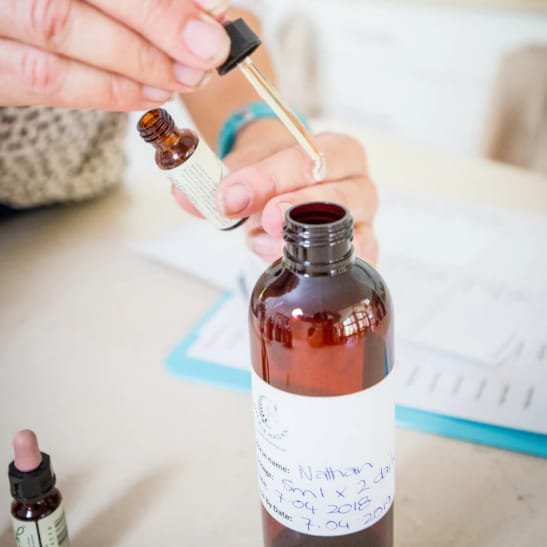
Herbal prescriptions are made from practitioner only, human grade liquid herbal extracts. They are not available over the counter. They can only be purchased by qualified practitioners.
They are syringed over the tongue for rapid absorption straight into the bloodstream.
Horses respond very well and quite often rapidly due to the naturally recognised plant chemical compounds.
They are formulated individually by hand for specific issues to each equine based on the holistic health assessment.
Raw ingredients are usually organic and or wild crafted. Traceability includes batch records, product testing on raw and finished product; and are tested at the state of the art laboratory at Southern Cross University which is the world leader in phyto-pharmaceutical testing.
With hundreds of herbs to choose from, it is important to use a qualified equine herbalist who can select the herbs most suited to the symptoms or condition your horse presents.
Lastly, not only is herbal medicine extremely effective, but it is also completely safe. There are some herbs that are not advised to prescribe for horses which I don’t use. Plant constituents are absorbed and used by the horse and anything not needed is excreted via urine, sweat or manure.
About The Author